
In recent years, Tantra has become increasingly popular in spiritual communities and, more broadly, among people interested in conscious living and personal development.
A significant portion of the Western understanding of Tantra revolves around sexual energy; however, the tradition itself offers much more than that.
Are you ready to embark on a life-changing journey, deepen your Tantra practice through consistent experience, and support your personal development?
In this article, we will give you some suggestions on how to become a certified Tantra teacher and present different options for your training. Let’s start from the beginning!
What is Tantra?
Those interested in teaching Tantra should first develop a clear understanding of authentic Tantra.
Despite its recent growth in popularity, Tantra is a philosophy that dates back thousands of years and has its roots in the Eastern world.
For many people, Tantra is part of a journey of self-discovery, personal growth, and deep transformation.
The term Tantra is very broad and, in the Indian tradition, can refer to a “text, theory, system, method, instrument, technique or practice.”
Today, learning and practicing Tantra can also open opportunities for personal and professional growth.

Types of Tantra
This practice can be broadly divided into two main approaches to what is often described as “authentic Tantra.”
First, Classical Tantra developed in India and was especially influential between the 5th and 12th centuries.
During this period, many texts known as Tantras were created, describing different philosophies and practices, including meditation, designed to expand awareness, explore the nature of reality, and move toward spiritual freedom and greater self-awareness.
Then there is Neo Tantra, which emerged in the West in the early 20th century.
This movement brings together different Eastern spiritual practices, including Tantra and Taoism, and often explores erotic energy, sacred sexuality, emotional awareness, and personal transformation.
Tantra’s broad nature has led to many interpretations across periods, cultures, and traditions, each approaching personal development differently.
This is why we can only tell you what Tantra is for us.
Tantra from the Heart
At Samma Karuna, we practice and teach “Tantra from the Heart,” an approach that helps us connect with ourselves and others mindfully and lovingly, encouraging self-awareness, authentic connection, and personal transformation.
We seek to build meaningful connections without judgment, expectations, or pressure, while respecting our own boundaries and others’.

We regard authentic Tantra as a way to celebrate the present moment as perfectly imperfect, just as it is, without constantly searching for another goal to reach or another role to take on. For us, Tantra isn’t simply something we practice in class—it is a way of living.
There is a great deal of discussion about the relationship between Tantra and sexual energy. At Samma Karuna, we see Tantra as something we can also apply to sensuality and sexuality, helping us explore the quality of our intimacy as part of a broader approach to well-being, relationships, emotional life, and our being as a whole.
Tantra is far from being simply a sex-oriented practice. For us, it is a heart practice that supports self-awareness, personal growth, and deeper connection with ourselves and others.
How to Become a Tantra Teacher
Embarking on the journey to become a certified Tantra practitioner can be a deeply fulfilling experience. It gives you the opportunity to explore the transformative potential of Tantric practices while learning how to guide others with awareness, integrity, and compassion.
This path requires deep self-reflection, dedicated training, and a strong commitment to ethical teaching.

Step 1: Personal Exploration
The first step toward becoming a Tantra teacher is your own personal exploration. Immerse yourself in the practices, philosophy, and principles that form the foundation of Tantra.
Make meditation and yoga a regular part of your life. They can help develop awareness, inner strength, mindfulness, and a deeper connection with your body and energy.
Tantra also explores sexual energy as a possible path toward greater awareness and personal growth. Practices involving breathwork, conscious touch, meditation, and energy awareness can help you explore this dimension of the practice.
Step 2: Choose a Training Program
Once you have established your personal practice, the next step is to find an experienced Tantra practitioner and a high-quality teacher training program:
– Research the school’s reputation and experience within the Tantra community.
– Look for programs that offer authentic Tantra certification and are led by experienced Tantra teachers.
– Examine the curriculum to see whether it covers philosophy, ethics, practical skills, teaching methodology, and a variety of Tantric techniques.
– A good program prepares you to teach, but a great program should also help you integrate Tantra into many aspects of your everyday life.
– We highly recommend taking an in-person course if you want an immersive, hands-on experience.
– Look for programs that expose you to different Tantric traditions, from classical approaches to Neo-Tantra.

Step 3: Certification
Certification is an important step in your journey toward becoming a Tantra teacher and applying what you have learned.
Training requirements vary considerably depending on the school and certification system.
A strong program should also give you opportunities to practice teaching under the guidance of experienced instructors.
This real-world experience is essential for developing your own teaching style and building confidence.
You should also become familiar with the ethical guidelines and code of conduct expected of Tantra teachers.
Following these principles is essential for creating a safe and respectful environment for your students.
Step 4: Develop Teaching Skills
As you progress in your training and practice, focus on developing your teaching skills.
Learn how to create a safe, supportive, and transformative environment that recognizes the physical, emotional, relational, and personal dimensions of the practice.
Being able to explain complex ideas clearly and simply is essential for helping students understand Tantric practices.
At first, teaching may feel challenging. Practice, feedback, and experience will gradually help you develop the confidence to guide others.
Remember that every student is unique. A good teacher learns how to adapt their approach while remaining grounded in clear principles and ethical boundaries.

Step 5: Practice and Join a Community
One of the most beautiful aspects of authentic Tantra is the sense of community it can create, and community is one of our core values at Samma Karuna.
To continue developing as a Tantra teacher, join a community of practitioners and teachers.
As with anything in life, engaging with others can be essential for growth, reflection, and learning.
Participate in workshops, attend in-person retreats, practice regularly, and join events led by experienced Tantra teachers.
As your confidence grows, you may also consider organizing your own workshops or classes to share your knowledge and experience with others.
Common Mistakes on the Tantra Journey
When you begin your Tantra journey, it is natural to feel excited or even overwhelmed.
However, there are some common mistakes that can limit your personal growth.
Here are four important pitfalls to avoid:
1. Over-sexualizing the Practice
Many people assume Tantra is primarily about intimacy and sexuality.
While sacred sexuality can be part of Tantra, Tantra is fundamentally a path of awareness, freedom, self-discovery, and transformation—not simply a collection of sexual techniques.
Focusing exclusively on sexual practices can disconnect Tantra from its broader philosophical and spiritual roots.
2. Skipping the Personal Work
To teach Tantra authentically, you first need to engage deeply in your own process of self-observation and personal development.
Real guidance comes from being in genuine contact with yourself.
If you do not integrate your own experiences, your words may sound insightful but lack the depth that comes from lived experience.

3. Neglecting the Body
Some spiritual seekers focus heavily on the mind while forgetting that Tantra is also an embodied practice.
It is not about escaping the body; it is about learning to experience it more fully and consciously.
This means listening to your body, becoming aware of your emotions, and learning to understand, process, and integrate your emotional experiences.
4. Looking for Instant Results
Tantra is not a quick fix.
It is a lifelong journey.
Developing a deep understanding of Tantra takes time, consistent practice, self-observation, and humility.
You may not notice dramatic changes immediately, but consistent practice can lead to profound and lasting transformation.
Become a Tantra Teacher at Samma Karuna
If you have decided to become a Tantra Teacher, you have come to the right place!
At Samma Karuna, we offer a comprehensive Tantra Teacher Training program suitable for both beginners and advanced practitioners.
We offer workshops and intensive courses that can take you all the way toward becoming a facilitator through our Tantra Teacher Training Course.
At Samma Karuna, we see Tantra as a path of self-observation, personal development, and deep transformation. Our approach combines experiential practice with self-reflection, helping students bring greater awareness into their relationships, emotions, sexuality, and everyday life.

Attending our school for in-person training has been a transformative experience for hundreds of students.
Even if you are not yet sure whether you would like to teach after the course, Tantra Teacher Training is an excellent opportunity to take a deep dive into the world of Tantra and learn how to integrate this ancient philosophy into your everyday life.
1. Tantra Training for Beginners
If you have little or no experience with Tantra and would like to explore it more deeply, we recommend first spending some time at our school and experiencing our approach firsthand.
You can take classes and participate in activities and workshops, including our core Mindfulness and Intimacy program, where you can experience some of the foundations of our approach to Tantra.
You can check our workshops calendar and find a program that suits you.
After studying with us, if you develop an interest in becoming a Tantra instructor, you can speak with our Tantra Training Manager.
Together, you can explore the next steps on your journey toward becoming an authentic Tantra instructor.

If you are a beginner but have already decided that you would like to become a Tantra Teacher, you can reserve your place in an upcoming Tantra Teacher Training Course.
You will get instant free lifetime access to our 4-week transformational program, an immersive path that explores different dimensions of personal development through yoga, Osho active meditations, breathwork, social meditations, BioDevelopment, and Tantra classes.
We recommend allowing at least one month before your Tantra Teacher Training Course to participate in this transformational program and experience additional Tantra workshops and classes.
2. Volunteering at Samma Karuna
Another great way to become familiar with our school, community, and activities—including Tantra—is to join our Volunteering program in Koh Phangan, Thailand.
As a volunteer, you will receive free lifetime access to our 4-week transformational program in exchange for a few hours of work at the school.
You will work alongside other volunteers, students, and teachers while contributing to the community in a meaningful way.
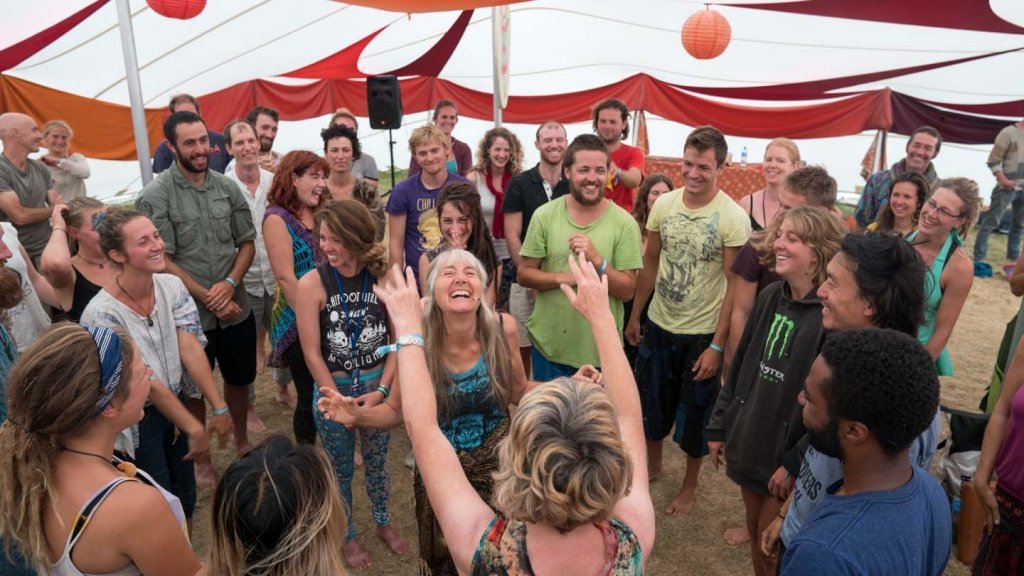
You will live, work, practice, and participate in activities as a member of the community.
It is a full immersion into Samma Karuna, its teachings, practices, and values. Our intention is to create a compassionate and supportive environment based on understanding, cooperation, and personal responsibility rather than competition.
At the end of your volunteering period, you will receive a 20% discount toward the Tantra Teacher Training Course.
3. Tantra Training for Advanced Practitioners
If you are already familiar with Tantra, have completed courses or workshops, and feel ready to take the Teacher Training Course, you may be asked to provide a reference from a teacher you have studied with. We would also like to speak with you before the training.
We are committed to training excellent Tantra teachers who know how to hold space responsibly during sensitive moments when participants may feel vulnerable or be moving through an intense personal process.

That is why we want to make sure you have a solid foundation before beginning our intensive 4-week training course.
Whichever path you choose, when you feel ready to take the next step, you can book the next available Teacher Training Course.
The Structure of the Tantra Teacher Training
Our Teacher Training Course includes both theory classes—including Tantric lineages and sutras, mantras and yantras, sexual education, and physiology of the body—and practical sessions, including BioDevelopment, Tao Bodywork, sublimation and transmutation of energy, and different meditation practices.
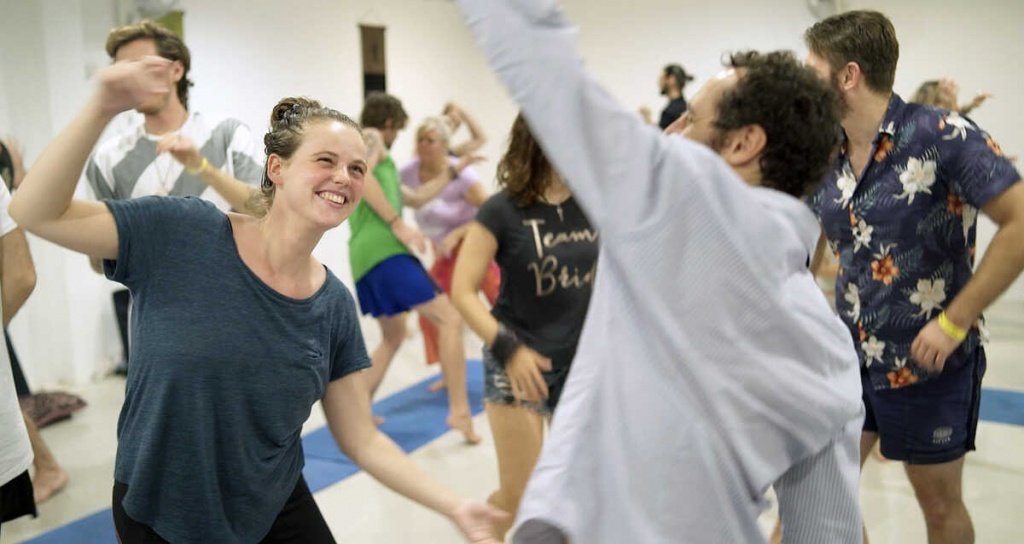
We explore different teaching techniques and explain how to structure a class. We also share marketing guidance for promoting your Tantra classes and complement the training with additional topics such as Tantra and nutrition.
Accommodation on our campus is included in the package, as well as one meal and one tea break per day.
For complete details, please check the full program.
Your Tantra Teacher Certificate
Upon successfully completing the 4-week Training Course, you will receive a “Tantra Teacher in Training” certificate, recognized by the Tantra Federation.
This certificate is valid for one year, during which you are required to teach a total of 100 hours* in order to convert your certificate into a permanent one. During your training, you will receive an account on the Tantra Federation website with a public profile where students can leave reviews.
For your certificate to be converted into a permanent one, you will need to maintain a positive review score of at least 4.0 out of 5.0. Your profile can remain active and public throughout your teaching career.
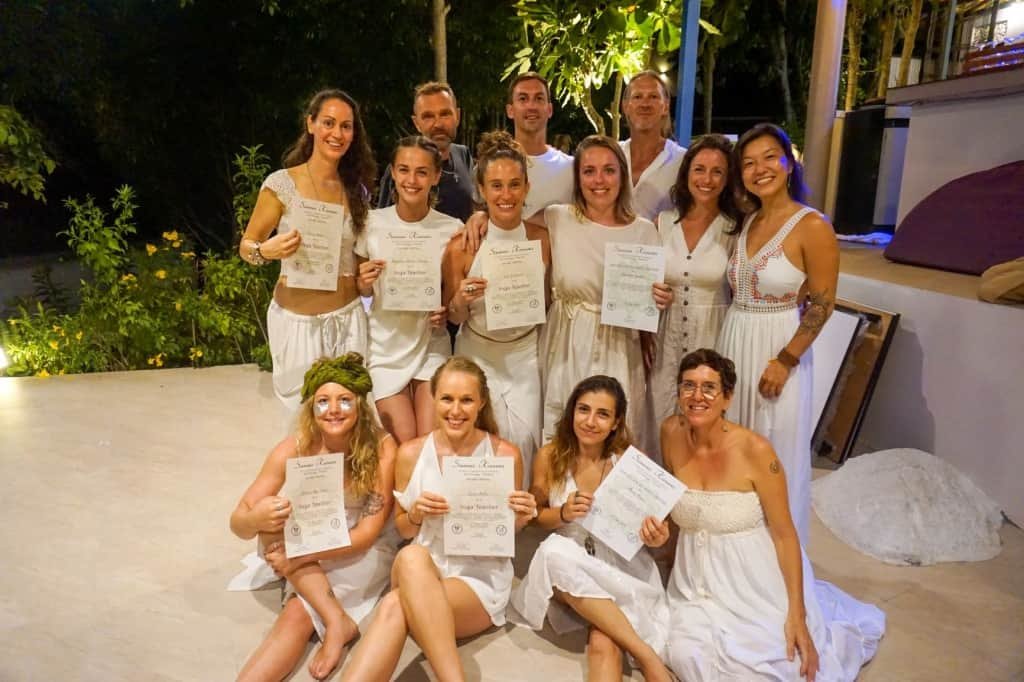
We aim to create a community of ethical and authentic Tantra instructors who adhere to Tantra Federation standards. Through a public profile and feedback system, past students can share their experiences and future students can better assess the quality and integrity of a teacher’s work.
Tantra classes and private sessions can involve sensitive and vulnerable moments. We therefore want both teachers and students to approach the practice with awareness, responsibility, and clear ethical standards. A transparent feedback system also helps students make informed decisions about the teachers they choose.
*Or fewer hours if you prepare a study or monograph on a topic agreed upon with your teacher.
Free Internship for Our New Authentic Tantra Teachers
After the course, we offer our newly certified teachers a 4-week internship, during which they can put what they have learned into practice in real classes.
This is an opportunity to build confidence and develop your teaching skills while remaining within a familiar, compassionate, and supportive environment.
Your classes will be free for participants to attend, and students will know that you have recently completed your certification. You can ask them for direct feedback about your teaching and identify areas for further development. It is a safe, non-judgmental space in which to grow as a teacher.
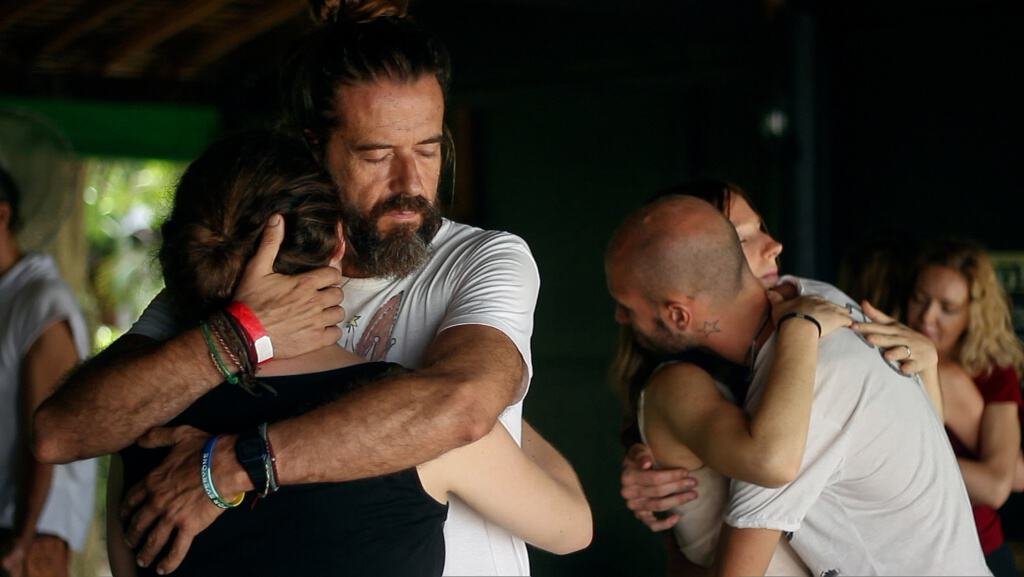
It can be an intense but deeply rewarding journey. You will step outside your comfort zone, challenge yourself to discover more of your authentic nature, learn new ways of relating to others with compassion, explore intimacy and connection, work with the energy within you, and learn how to share what you have discovered with others.
Qualities of a Tantra Practitioner and Teacher
Becoming an effective and authentic Tantra guide is not simply about memorizing techniques.
It requires dedication to personal growth, self-observation, and honesty with yourself.
Good Tantra teachers often develop certain qualities that allow them to share these teachings responsibly and meaningfully.
If you are considering this path, reflect on the following qualities:
1. Self-awareness: The ability to observe your thoughts, emotions, and actions without immediately judging them.
2. Emotional intelligence: The capacity to remain present and support others during vulnerable moments and periods of personal transformation.
3. Commitment to personal growth: An openness to self-exploration and the deeper dimensions of Tantra can help you appreciate its transformative potential.
4. Embodiment: This means living your practice in everyday life. How you breathe, listen, relate, respond to conflict, and care for yourself can all reflect your inner work.
In practical terms, this may mean choosing to rest instead of overworking, taking mindful breaks during the day, or including meditation and breathwork in your daily routine.
FAQs

1. Do I need a partner to begin Tantra?
No. You do not need a partner to begin Tantra. At its foundation, Tantra can be a deeply personal journey.
While some practices involve working with a partner, many focus on self-awareness, meditation, embodiment, and individual exploration.
2. Is Tantra only about sexuality?
No. Tantra is not simply about sexuality.
It is a broad system that can include meditation, breathwork, Tantra Yoga, devotion, energy work, self-observation, conscious relating, and much more.
3. Can I learn Tantra online?
Yes. Online courses can provide an introduction to Tantra and help you build a foundation.
However, because Tantra is highly experiential, in-person training offers an important dimension of learning, particularly for those who want to deepen their practice or become teachers.
4. What can I do with a Tantra Teacher Certification?
With a Tantra Teacher Certification, you can develop the skills to lead group classes, organize retreats, facilitate workshops, or offer one-on-one sessions, depending on the scope of your training and professional qualifications.
The training can also strengthen skills related to facilitation, communication, embodiment, emotional awareness, and working responsibly with individuals and groups.
5. How long does it take to become a Tantra teacher?
It depends on your previous experience, the depth of the program, and the certification requirements.
Some training programs last several weeks, but developing genuine mastery requires ongoing practice, experience, self-reflection, and guidance.
Continued practice and teaching gradually deepen your understanding and confidence.
6. What role does the breath play in Tantra?
Breath plays an important role in many Tantric practices.
It can support awareness of the body, help regulate the nervous system, and be used to explore life-force energy, traditionally referred to as prana.
Many practices use conscious breathing as a way to connect the mind, body, emotions, and energy.
7. Do I need experience with yoga to start Tantra?
No. You do not need previous yoga experience to begin exploring Tantra.
While Tantra Yoga can form part of the broader Tantric tradition, people from many different backgrounds can begin this journey.
A beginner’s mindset, openness to learning, willingness to grow, and commitment to practicing responsibly are more important than physical flexibility.
In Summary
We hope you now have a clearer understanding of what it takes to become a certified and authentic Tantra instructor.
We offer early-bird discounts when you reserve your place at least 6 weeks before the course. Couples are welcome, but a partner is not required.
Explore our website to discover our upcoming in-person trainings, retreats, and programs.

